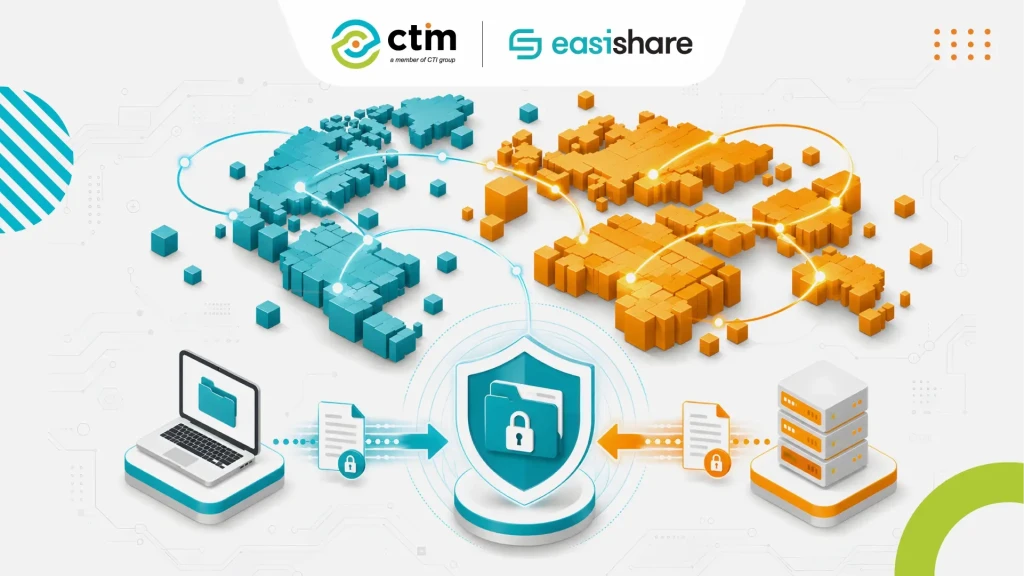

Across Malaysia’s fast-moving digital economy, companies are no longer putting all their infrastructure bets on a single cloud provider. Teams are spreading workloads across multiple platforms, running analytics where performance is strongest, deploying customer applications where latency is lowest, and storing sensitive data where compliance requirements are easiest to manage. In many organizations, multi-cloud is no longer an experiment. It is quickly becoming the foundation of Malaysia’s cloud strategy.
But things start to get complicated the moment Kubernetes enters the picture. Running containerized workloads across multiple cloud environments sounds powerful on paper, yet in practice it introduces a surprising amount of operational friction. Each platform behaves a little differently, from networking and provisioning to monitoring and lifecycle management. Without the right architecture, the very approach meant to unlock agility can quietly introduce a new layer of complexity.
What’s Driving Malaysia’s Shift Toward Multi-Cloud?
Malaysia’s digital economy is accelerating rapidly. Financial platforms process millions of transactions, e-commerce systems scale to regional demand, and public services continue to expand online. As infrastructure needs grow, many organizations are realizing that relying on a single cloud provider can limit flexibility and resilience.
That is why a multi-cloud strategy is gaining traction across Malaysia’s enterprises. It allows businesses to run workloads wherever they perform best while maintaining freedom across multiple platforms. But what exactly is pushing organizations to move in this direction?
Balancing Cost, Compliance, and Performance Across Clouds
Each cloud provider offers different advantages. Some deliver stronger regional infrastructure, others provide better compute pricing, and some specialize in services tailored for specific workloads. By adopting a multi-cloud approach, Malaysian organizations can place applications where they perform best while balancing cost efficiency, regulatory requirements, and operational flexibility.
Kubernetes Gets Messy Across Multiple Clouds
The challenge appears once Kubernetes workloads begin running across multiple cloud providers. Each environment introduces its own infrastructure configurations, networking models, and operational tooling. Over time, these differences can create fragmented workflows and inconsistent cluster management. Instead of focusing on delivering new features, teams often find themselves dealing with infrastructure inconsistencies across clouds.
Why Consistency Is the Missing Piece in Multi-Cloud Architecture
Once organizations expand across multiple cloud platforms, the biggest challenge is not infrastructure capacity. The real issue is operational consistency. When environments behave differently, teams must constantly adjust deployment pipelines, troubleshoot configuration issues, and maintain separate operational practices.
To make multi-cloud truly work, organizations need a way to operate different environments as if they were part of a single platform. That consistency becomes the foundation for scalable and reliable infrastructure.
Here are two elements that help make that possible.
Consistent Infrastructure Enables Faster Innovation
When environments behave the same way everywhere, teams gain the confidence to move faster. Developers can deploy applications without worrying about infrastructure differences, while operations teams gain a predictable framework for monitoring and scaling workloads.
For organizations navigating Malaysia’s evolving multi-cloud ecosystem, this consistency allows infrastructure to support innovation instead of slowing it down.
Standardized Kubernetes Deployments Reduce Multi-Cloud Friction
Standardization plays a major role in keeping multi-cloud infrastructure manageable. Technologies such as Kubernetes Cluster API allow infrastructure and cluster configurations to be defined declaratively as code. Instead of manually configuring clusters for each cloud environment, teams can deploy the same cluster definitions across multiple platforms.
This approach automates cluster provisioning, scaling, and lifecycle management while ensuring infrastructure behaves consistently regardless of where it runs.
Also Read: Cloud-Native Applications: The Key to Faster, Smarter Business Development
How Cloud-Native Platforms Simplify Multi-Cloud Kubernetes
Running Kubernetes across several cloud providers can quickly become overwhelming without the right architecture. That is why many organizations building a multi-cloud strategy in Malaysia are turning to cloud-native platforms that unify infrastructure management and automate operational tasks.
Rather than stitching together disconnected tools and scripts, these platforms create a structured environment where clusters can be deployed, managed, and monitored consistently across different cloud environments.
Here are a few capabilities that make that possible.
Automation Removes Manual Setup and Reduces Operational Risk
Automation dramatically simplifies Kubernetes lifecycle management. Technologies such as Kubernetes Cluster API allow clusters to be defined declaratively using configuration files instead of manual scripts or repetitive provisioning processes. Once defined, the platform automatically provisions infrastructure, scales nodes, performs upgrades, and even recovers clusters when issues arise.
This automation minimizes human error while ensuring clusters remain aligned with the intended architecture across environments.
A Unified Control Plane Brings Multi-Cluster Visibility
Kubernetes relies on a control plane that manages cluster state and orchestrates workloads across nodes. Modern multi-cloud platforms extend this concept further by enabling centralized management of multiple clusters across different infrastructures. With a unified management layer, organizations can monitor workloads, enforce policies, and manage cluster lifecycles without switching between separate tools.
Cloud-Native Ecosystems Deliver Consistent Deployment Patterns
The broader cloud-native ecosystem helps make multi-cloud infrastructure predictable. Technologies from the Kubernetes and CNCF landscape provide standardized tools for orchestration, networking, observability, and application delivery. By building on these shared foundations, organizations can establish consistent deployment patterns across cloud providers, creating a stable infrastructure that supports reliable application delivery at scale.
Also Read: Oracle Cloud: Reducing the Risk of Manual Database Management
Start Your Multi-Cloud Journey in Malaysia with Oracle
As organizations across Malaysia continue expanding their multi-cloud environments, having a consistent operating system layer becomes essential. Oracle Linux provides an enterprise-ready foundation that runs smoothly across on-prem infrastructure, private clouds, and major public cloud platforms. This consistency helps teams standardize deployments, reduce operational friction, and keep Kubernetes environments easier to manage as infrastructure scales.
Designed for modern cloud-native workloads, Oracle Linux combines performance, security, and flexibility. With the Unbreakable Enterprise Kernel optimized for demanding applications, built-in security and automation features, and a zero licensing cost model with optional enterprise support, it gives organizations a reliable platform for running containers, applications, and data workloads across their multi-cloud infrastructure.

Take Your Multi-Cloud Strategy Further with CTM
If you’re ready to turn this multi-cloud vision into reality, CTM is here to help. As part of the CTI Group, Computrade Technology Malaysia (CTM) helps organizations unlock the full potential of Oracle Linux with end-to-end support, from infrastructure planning and deployment to optimization and long-term operations.
Reach out to us today and take the next step toward a more consistent, scalable, and future-ready multi-cloud strategy.
Author: Danurdhara Suluh Prasasta
CTI Group Content Writer