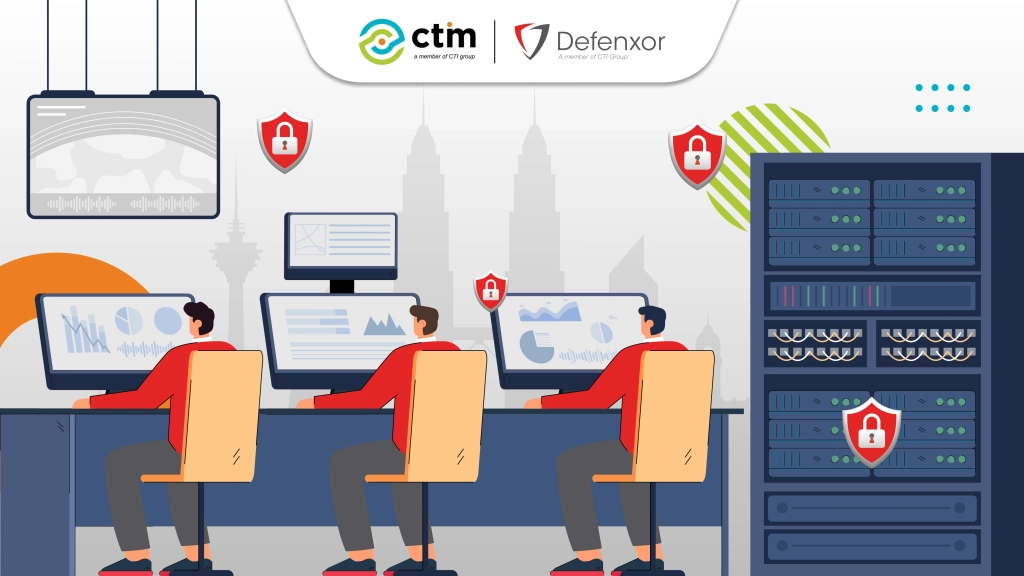
Alt text image: Defenxor SOC Service Provider CTM Malaysia
As your business adds cloud services, applications, and remote users, security events start showing up in more places. A suspicious login in one system and unusual network traffic in another might be linked. The challenge for Malaysian enterprises is bringing those pieces together fast enough to make the right call.
The right SOC service provider helps turn that scattered activity into a clear picture of what’s happening and what needs attention. If you’re evaluating a security operations center in Malaysia, start with these five capabilities to find a provider that fits your business.
Key Takeaways:
- Choose a SOC service provider with five essentials: connected visibility, risk-based prioritization, response automation, actionable threat intelligence, and scalable coverage with vulnerability management.
- These capabilities help teams cut alert noise, contain threats, and keep protection current as the business grows.
- Defenxor SOC, available through CTM, combines SIEM and expert analysts for 24/7 monitoring with less in-house SOC overhead.
1. Visibility Across Your Environment
Your provider should connect activity across the systems your business relies on. That shared view helps analysts recognize when seemingly separate events are part of the same threat.
To assess that visibility, look at how the service brings data together, connects it to user identities, and checks for gaps as the environment changes. These three capabilities work together to support more informed investigations.
Connected Endpoint, Network, and Cloud Data
A security information and event management (SIEM) platform brings endpoint, network, and cloud logs together for analysis. Reliable integrations help analysts follow activity across systems and investigate how an incident developed.
Monitoring That Connects Identity and User Activity
A suspicious login means more when analysts can see the account’s access rights and recent activity. Look for monitoring that links identity details with what users actually do.
Regular Checks for Coverage Gaps
New applications and devices can quietly create gaps in monitoring. Regular coverage checks help the provider spot missing logs, disconnected systems, and assets that need to be added to monitoring.
Also Read: Building Enterprise Cybersecurity: The 12 Pillars for Malaysia’s Digital Future
2. Risk-Based Threat Detection and Alert Prioritization
When alerts start piling up, your team needs to know where to begin. A SOC service provider should prioritize cases according to their potential impact on the business.
That takes detections that filter out noise, alerts that explain what’s happening, and priorities that guide analysts toward the next step. Here’s how those capabilities work together.
Detection That Cuts Through Alert Noise
Grouping related events and tuning detection rules can reduce duplicate or irrelevant alerts. That gives analysts more time to examine credible threats and build a stronger understanding of each case.
Alerts With the Context Analysts Need
Useful alerts tell analysts who was involved, what was affected, and why it matters. With that context, teams can assess urgency and understand the potential consequences for operations.
Priorities That Keep Analysts Focused
Clear severity levels and escalation paths help urgent cases reach the right people quickly. Look for a process that keeps investigations moving and stakeholders updated as the situation develops.

3. Incident Response Automation and Threat Containment
Fast response is easier when the next steps are already agreed on. The provider should explain what it can do, what needs approval, and how your team will be involved.
Automation, containment, and response planning each play a role in making that happen. As you evaluate a provider, here’s how those capabilities should support a coordinated response when time matters.
Automation for Routine Security Tasks
Tasks such as collecting evidence, creating tickets, and sending notifications can be automated. Confirm which workflows are included and how analyst oversight and approvals are built into the process.
Clear Options for Threat Containment
Containment could involve isolating a device, blocking a malicious connection, or suspending an account. Look for supported actions, agreed permissions, and a clear understanding of who can authorize each step.
Practical Incident Response Plans
Documented playbooks and service-level agreements (SLAs) should define response expectations and responsibilities. Practicing those plans helps both teams coordinate containment, remediation, and recovery when an incident puts operations under pressure.
Also Read: How to Build a Resilient Cyber Defense: The Role of Cyber Security Solutions in 2026
4. Threat Intelligence Integration and Analysis
Threat intelligence helps teams connect what’s happening inside their systems with developments in the wider security landscape. The provider should make that information relevant to your business.
To see whether that intelligence will be useful, look at its sources, the patterns analysts uncover, and the guidance your team receives. Each should bring you closer to a practical security decision.
Global Insights With Local Relevance
Global research explains broader attack trends. Malaysian advisories add local context. Look for a provider that evaluates both against your industry, infrastructure, and current security priorities.
Insights Into Emerging Attack Patterns
New threat research can reveal techniques that existing detections miss. Analysts should connect those findings with activity in your systems and adjust monitoring as attack patterns evolve.
Recommendations That Fit Your Environment
Intelligence should lead to a useful next step, whether that’s updating a detection rule, investigating an account, or addressing a vulnerability. Recommendations should reflect your environment and business priorities.
5. Scalable SOC Coverage and Vulnerability Management
Choosing a security operation center in Malaysia means thinking beyond today’s setup. Every new application, cloud service, or user adds something else to protect. The best SOC in Malaysia for your business should keep coverage current, track vulnerabilities, and turn lessons from incidents into stronger protection. Defenxor SOC supports that through Defenxor Intelligence Managed Security (DIMS).
DIMS pairs SIEM technology with security analysts to deliver 24/7 monitoring, threat intelligence, centralized log management, vulnerability management, and incident response. Its mobile app keeps your team in the loop with real-time alerts, security updates, and direct access to analysts. With in-house appliances and certified professionals, you get managed SOC capabilities with less of the staffing and infrastructure burden that comes with running an in-house SOC.
Also Read: The Real Reason Data-Centric Security Is Taking Over Cyber Defense
Strengthen Your Security Operations with CTM
If you’re ready to strengthen your security operations, CTM is here to help. As part of the CTI Group, Computrade Technology Malaysia (CTM) offers Defenxor SOC in Malaysia as an authorized distributor, helping you understand what’s covered and how the service fits your team’s monitoring and response needs.
Connect with CTM to explore a cybersecurity solution in Malaysia that gives your team the coverage and support it needs as your business grows.
Author: Danurdhara Suluh Prasasta
CTI Group Content Writer